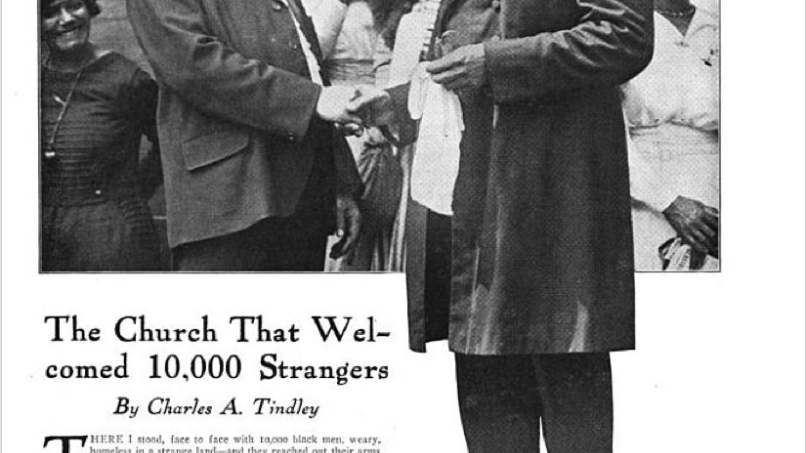
Tindley Temple, “The Church That Welcomed 10,000 Strangers”
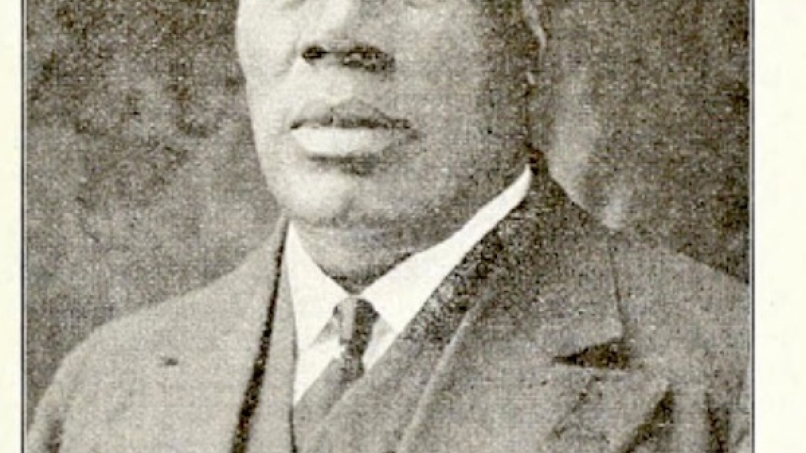
When the First World War unleashed the First Great Migration, Reverend Charles Albert Tindley saw the great exodus to the north as "the beginning of the freedom of my people." Freeborn in Berlin, Maryland in 1851, during the period of slavery, Dr. Tindley was Philadelphia's most famous African-American minister, a man whom Carter G. Woodson, in his 1925 History of the Negro Church, called "probably the greatest preacher of power developed during the last generation." Tindley also wrote and published hymns that carried his fame far and wide, and that are still sung in churches throughout the United States. Believing that everything that he and his church could do to help educate, uplift, and move the southern newcomers towards economic independence would help solve the problem of race for Blacks and Whites alike, Tindley threw open the doors of his East Calvary Methodist Episcopal church to newcomers, offering meals, clothes, beds and night classes to those in need. He prevailed upon members of his congregation to buy houses to rent to newcomers, and opened a building & loan association. In 1906 Calvary Methodist Episcopal was the first African-American church to move onto Broad Street. With an active membership of more than 7,000 by 1920, the church had become too small to hold the thousands flocking to Tindley's sermons. After years of fundraising they constructed a new East Calvary M.E. Church, today's Tindley Temple, which opened at Broad and Fitzwater in 1924.